WE CREATED A WILD GARDEN SURROUNDING OFFICES PERCHED ON A BUILDING
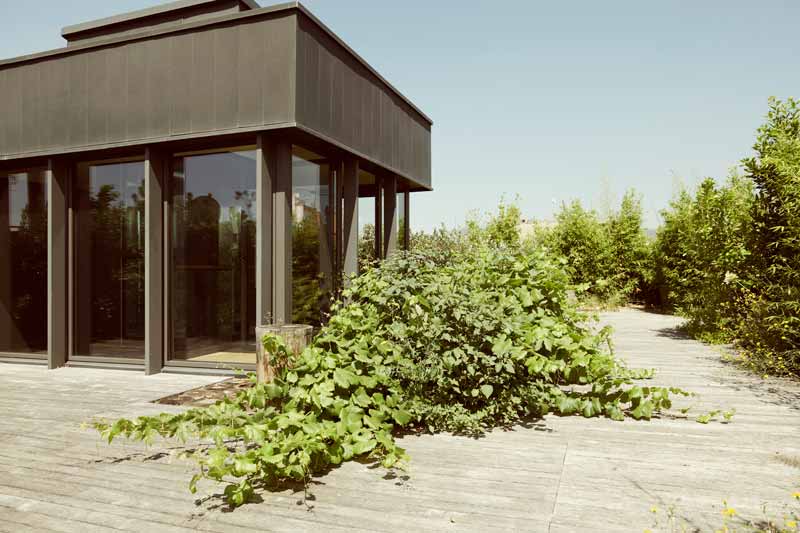
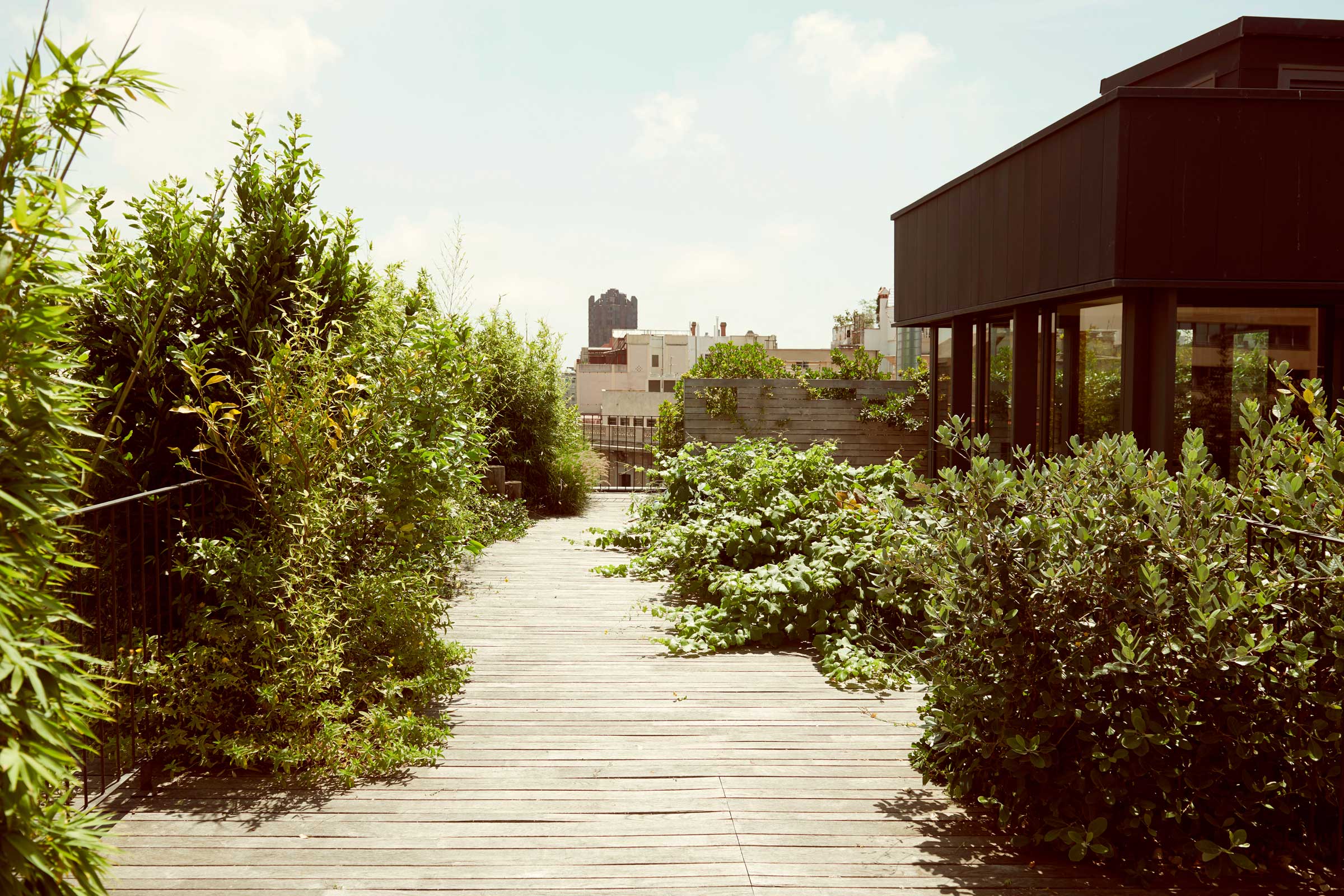
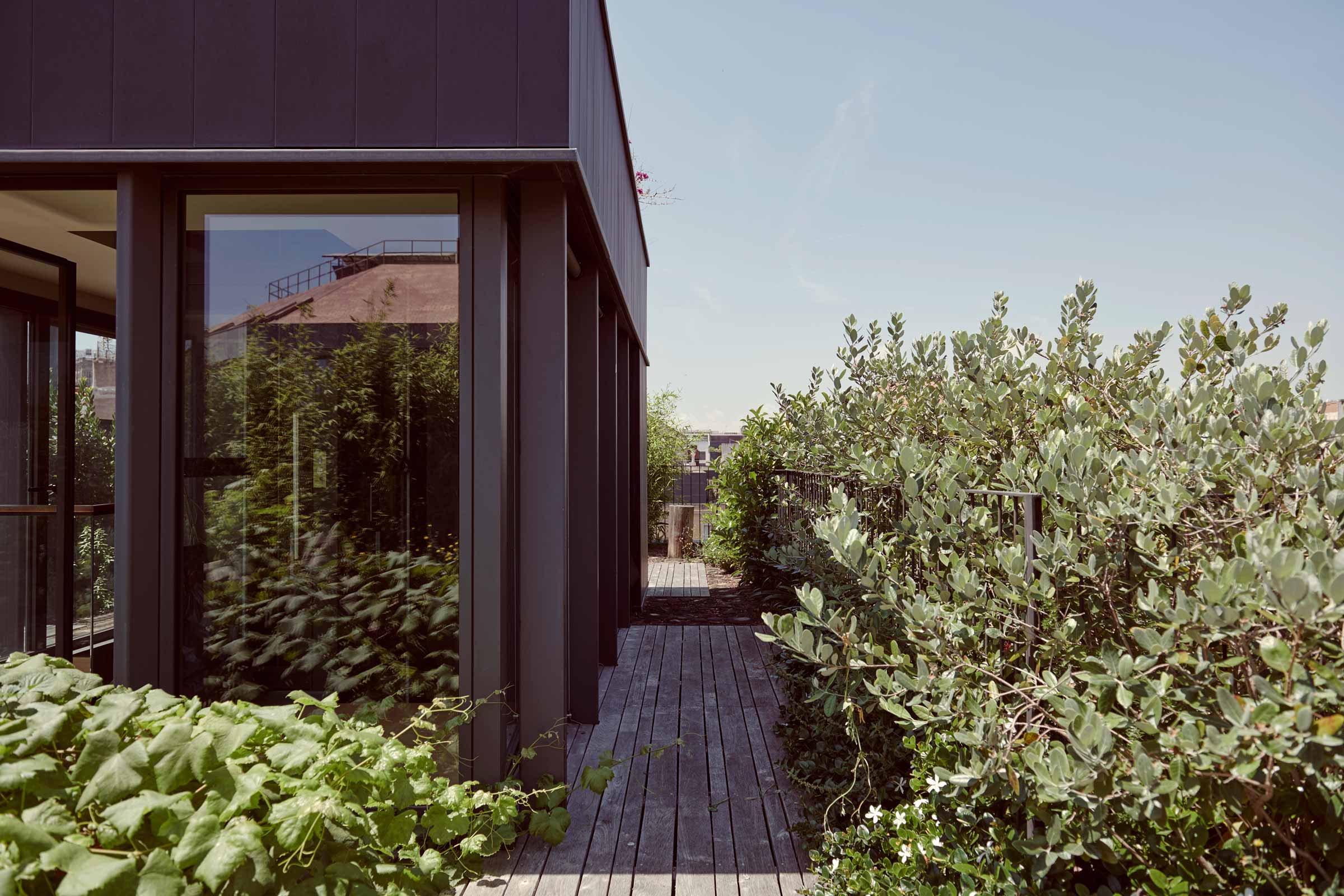
The commission was for a garden on a rooftop. But not on a conventional rooftop, but on top of a module, built, transported, and placed atop a building. It was a project that allowed us to put into practice and showcase our commitment to the fifth facade. We set out to create a diverse organic space, both in species and uses. A natural island in the midst of Barcelona’s Eixample, where the dynamics of the architecture firm La Casa por el Tejado coexist with those of the local fauna. People coexist with birds and insects that use the biological corridor that runs from the Collserola mountain range to the Mediterranean coastline, collecting migratory flows from the Besós and Llobregat rivers.
We integrated all elements during the architectural design phase with modules in production. We could verify the weight that the structure could bear before its placement on the existing building. We also studied how plant species would function, soil occupation, and circulation uses, aspects that influenced the final form.
A natural space not only for better work but also to contribute to the conservation of a natural corridor in the city of Barcelona.
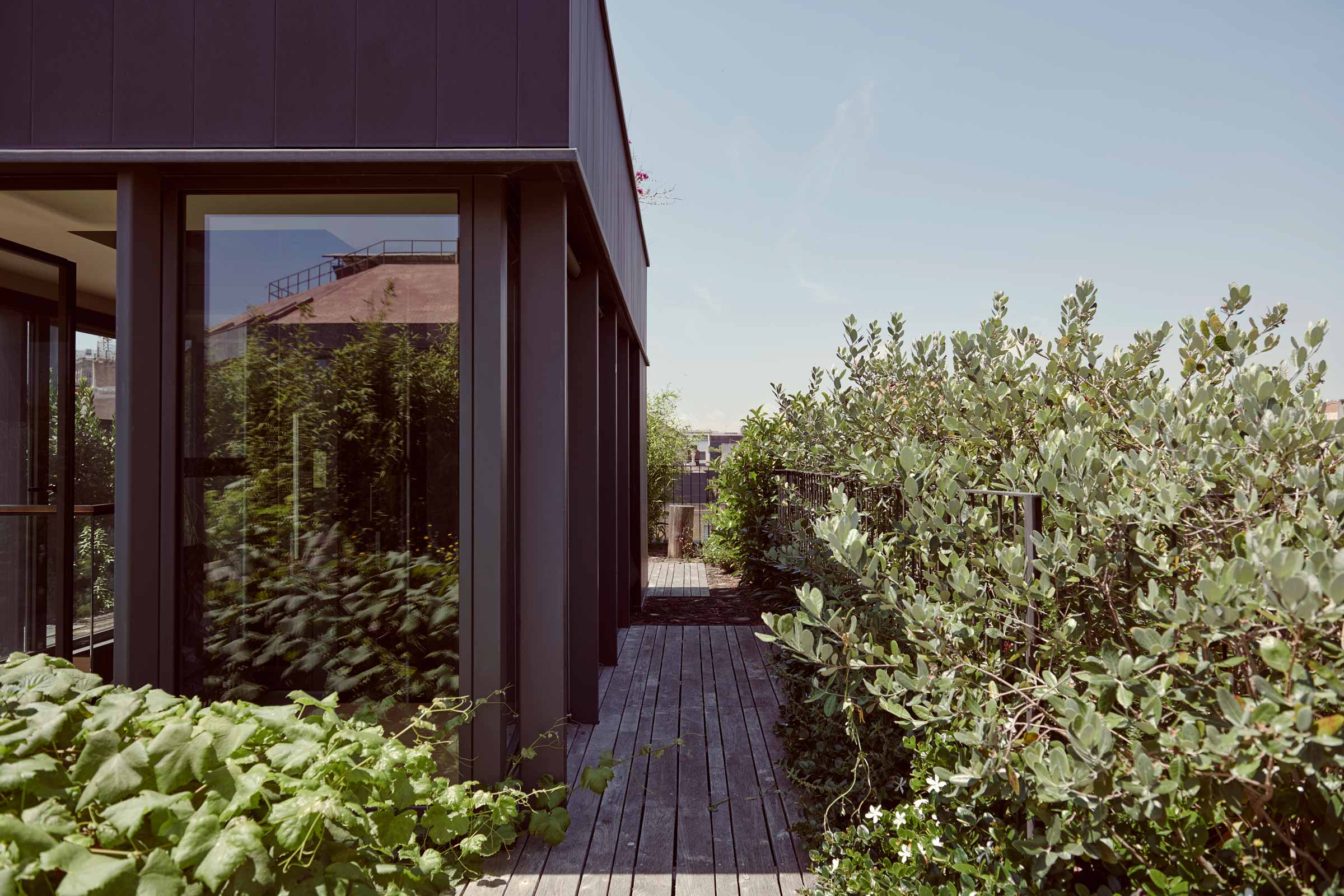
At all levels, technical, aesthetic, etc., the challenge was to achieve a casual and spontaneous appearance that would distance us from the idea of rigor and the need for exhaustive control required when working with the roof of a building. The vegetation in the project, completely controlled, responded to a framework of modular planting with a rigid ‘Tetris’ arrangement.
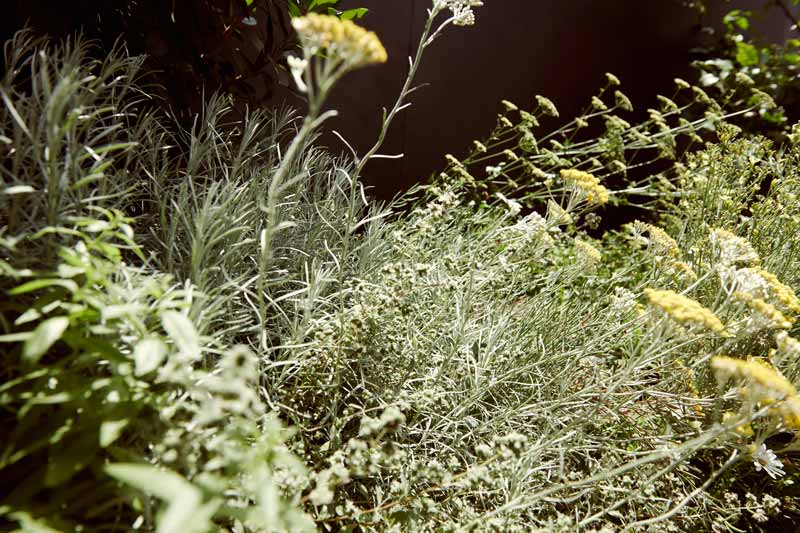
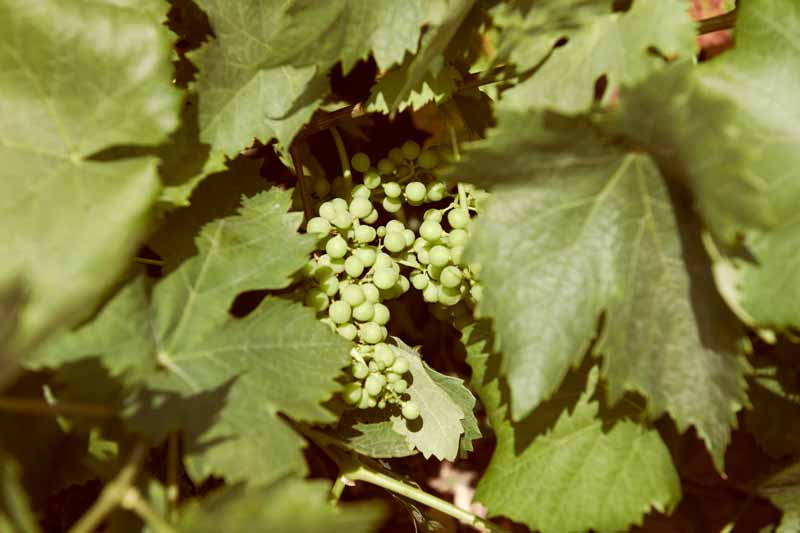
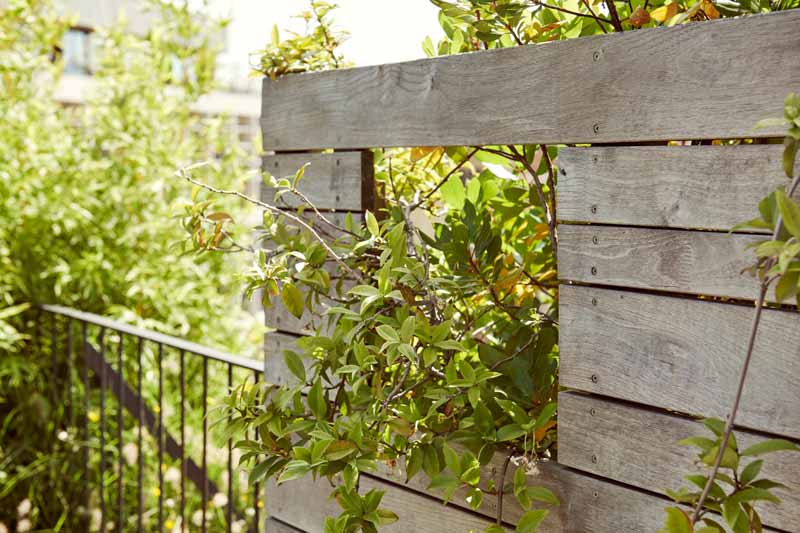
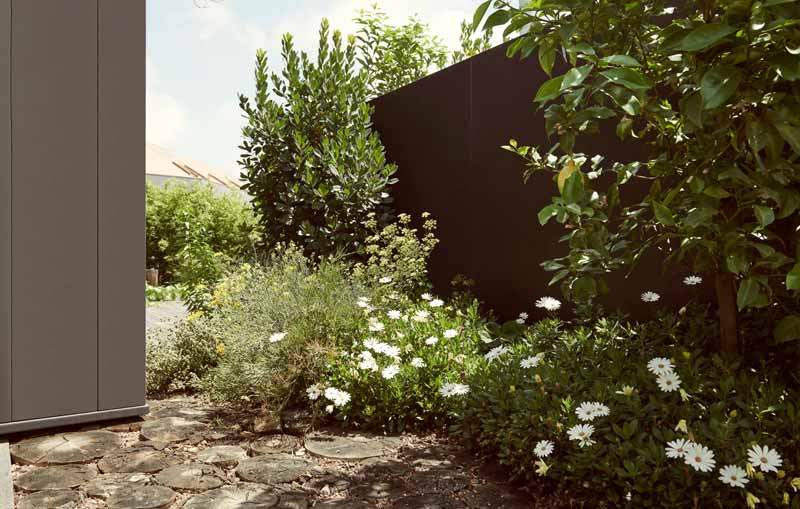
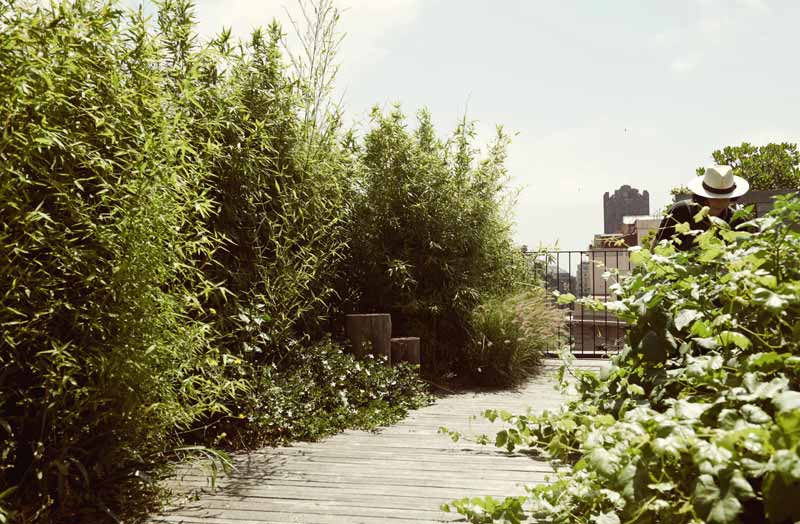
We installed two types of vegetation. On one hand, structuring vegetation that delineates the space and guides its use. For this purpose, we chose Phyllostachys sp, on the sides, we selected native species such as Arbutus unedo. To this selection, we added species that are not native such as Acca sellowianathat are very attractive to birds and insects due to their fruits and flowers. Finally, we completed it with vines and a fruit garden, reflecting the personal preferences of the owners.
The juxtaposition of the different elements gave a distinctive language to the place, where the furniture pieces are the ground itself and cut trunks.
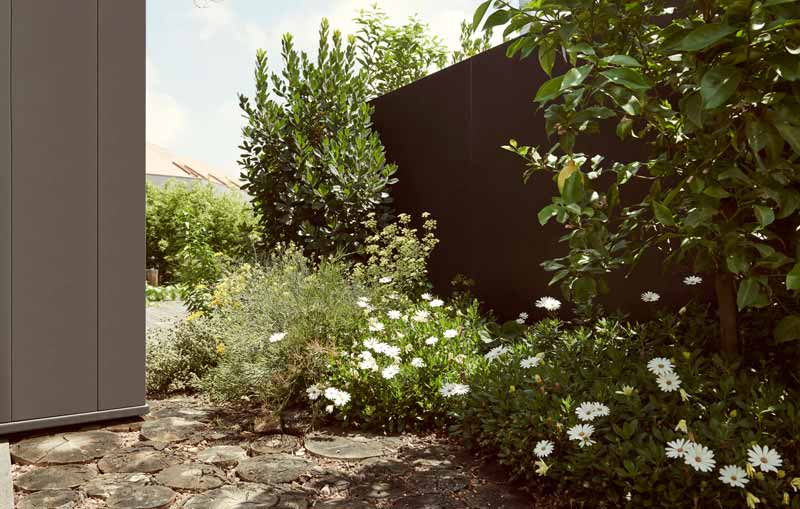
It was unimaginable to make such good use of the two gardens of the office. The neighbor’s rooftops contrast with ours. Birds eat grapes, strawberries, and build their nests while we hold our meetings.